

The High Cost of Low Overheads
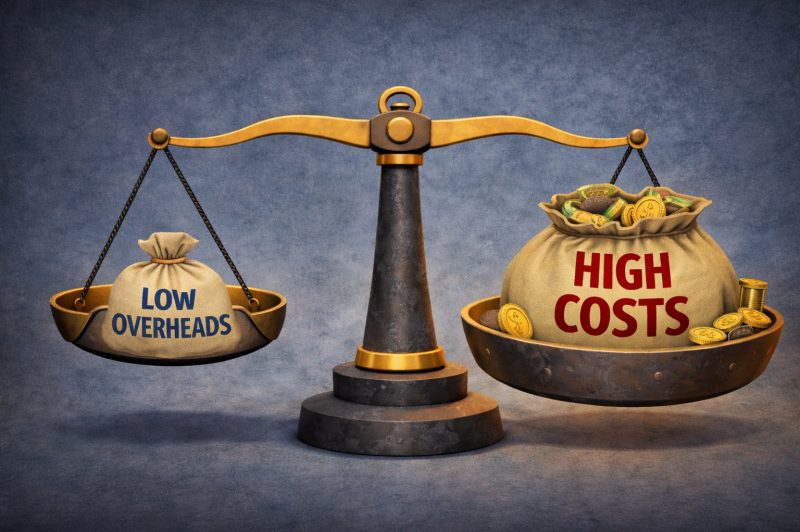
A common issue we encounter across construction projects of all types is the high cost of low overheads, particularly in relation to the commercial function.
In an effort to keep overheads lean and bids competitive, projects are often set up without sufficient commercial support. On paper, the value of sufficient commercial support might be hard to justify. It is, after all, an overhead. In reality, this frequently leads to higher costs for commercial support later on, as well as under-recovery of additional expenditure, thereby eroding margins.
In circumstances where commercial support is insufficient or stretched, we see several common issues arising:
As a project progresses, these shortfalls compound. This often results in contractors absorbing additional costs they otherwise had a legitimate contractual right to recover.
The net effect is that margins are eroded by an order of magnitude far greater than the cost of sufficient commercial support.
In fact, late engagement of commercial resources often proves more expensive than engaging them from the outset. By the time support is brought in, commercial opportunities are typically already forgone, records are incomplete, notices have been missed, and entitlement has not been properly preserved. Recovering the position at that stage requires significantly more effort, often with a reduced prospect of success. The cost of that reactive intervention can far exceed what it would have cost to have sufficient commercial support from the outset.
From a commercial perspective, the role is not only administrative, but also fundamental to protecting legitimate commercial interests and managing risk in real time. A properly functioning commercial resource acts like a radar, spotting potential problems at a distance and in sufficient time to mitigate the risk and avoid a more serious impact. Without this, the contract becomes a source of exposure.
At Oakwood Consulting, we regularly support clients who find themselves in this position. In many cases, our involvement is reactive, stepping in after the fact.
A far better outcome is achieved when the right commercial resource is embedded early, whether that is:
In either scenario, the objective is the same: ensure that contractual entitlements are identified and preserved so that additional costs can be recovered as the project proceeds.
The commercial function should therefore be viewed not as an overhead, but as a value-generating component of project delivery that manages commercial risk and delivers better margin results.
Investing in that capability upfront is one of the most effective ways to avoid the high cost of low overheads.
Richard Everitt (Director, Oakwood Consulting)